
Wondering Why Is My Cat Pooping On The Floor? There are several behavioural and medical reasons for your cat pooping on the floor. Some of them include an untidy litter box, stress, fear, age, behavioural issues, unidentified illness, etc.
In today’s article, we will see detailed reasons for your cat poop on the floor. So let’s get started.
1) Issues with litter box
The litter box is too clean
This is clear evidence of how fussy the cats can be. These fur balls will hesitate to use the litter box if you clean it too much with strong-smelling chemicals. Felines have a sharp sense of smell. Therefore, they find strong-smelling chemicals overwhelming.
Uncleaned litter box
According to Mr Sinnott-Stutzman (board certified in vet emergency and critical care), this is the most common reason why felines poop on the floor. Felines avoid entering untidy places. They want an appropriate place to do their thing.
Inaccessibility to the litter box
This is mostly the case if your feline is aged. If you place the box away from her reach, she might poop on the floor. Moreover, this indicates that the cat tried to use the litter box but failed.
Poor placement
Poor placement of litter boxes affects your cat’s pooping habit. However, this problem only occurs in some cases. When felines cannot see outside of the box, they feel vulnerable. And hence they stopped using it.
Fewer litter boxes
Felines are very territorial. Therefore they do not like to share their litter box with other pets. If you have multiple pets, then consider placing multiple litter boxes.
Small litter box
A larger litter box allows the feline to move freely and feel secure. Therefore, it is better to buy a larger litter box for the cat. If you have a smaller litter box, your cat may avoid using it.
2) Your cat was an outdoor cat
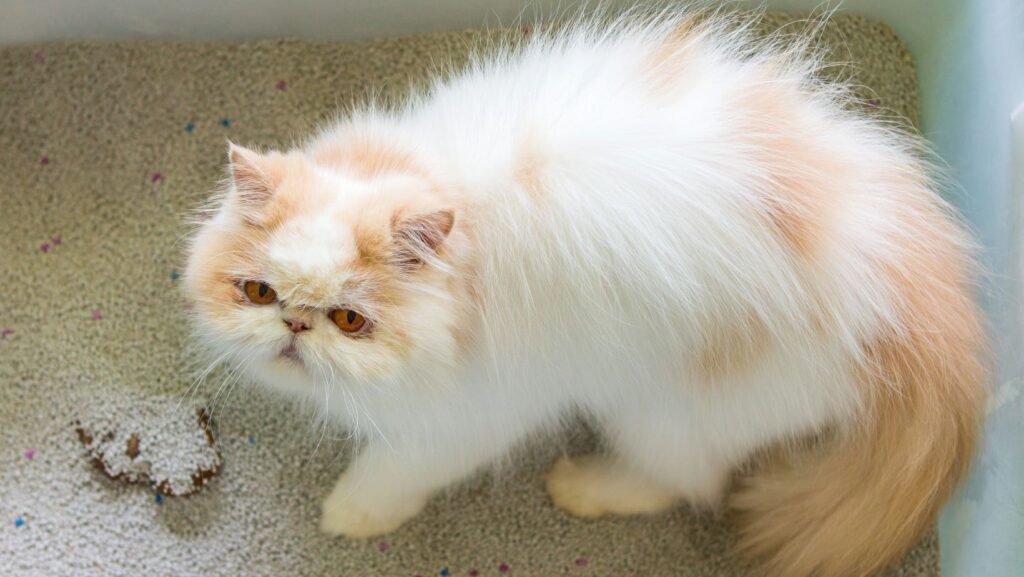
If you have a feral cat, then you may face this challenge more often. These cats find it difficult to become domestic cats. Moreover, they have more energy and wild instinct.
Therefore, you may see him digging food bags, burning poop, peeing on the bed, etc. it will come out of this phase when he will realise that your house is safe. Also, the house is not its personal territory.
3) Multiple pets in Home
Felines love their personal space. Therefore, if you have multiple pets in the house and they use the same litter box, then your cat may deny using the same. The litter will get dirty faster. Hence, this may stop your cat from using it.
4) Territorial issues
If your feline feels that it needs to mark its territory, it will pee or poop in the desired area. This is very common when there are multiple cats or a newborn child in the house. New animals or people threaten the felines. They start feeling that they will lose their territory.
You can use enzymatic sprays on the area where your cat marks the most. You can also keep the litter box, toys, and bedding in the same area. This may reduce pooping thing.
5) Your cat does not like the smelly litter
Yes, smelly litter can make your cat poop on the floor. A feline’s nose has around 200 million odour sensors. Therefore, they have a sensitive noses.
Even if you have a good smelly litter, it can still make your cat hate it. However, the smell can motivate the cat to poop outside the litter box.
Additionally, the scent reduces the litter’s impact as a territory. This makes the cat feel less secure.
Therefore, unscented litters are the best. Also, there are many options for odour elimination in the market and on the internet.
6) Your cat is scared, so pooped
Your cat may poop on the floor if it is scared. This can be due to noise, a new member, changing litter box position, etc. To tackle this, move the litter box to a safer place. Thai places can be away from the commotion and private.
7) Your feline is upset
Sometimes your cat may express its mood via pooping on the floor. If there are some recent changes in your cat’s surroundings, it can highly affect the fur ball. In fact, this could upset your cat very much.
Therefore, give it some time to cope with the situation. Also, try to encourage him to use the litter box. You can offer your cat a treat to motivate it to use the litter box.
8) Major illness may trigger frequent poops
The reason for your cat pooping on the floor can be related to any medical illness. Depending on the frequency of this cause, you can try to make changes in your cat’s diet. However, this can be a more severe issue like arthritis, inflammatory bowel disease, colitis, etc.
Also, check if your cat shows additional issues like changes in urine habits, frequent vomiting, etc. Occasional vomiting in cats is very normal but if you encounter your cat vomiting more than 2-3 times a month it indicates that something is wrong.
9) Feline Constipation
This is one of the major medical reasons for your cat to poop outside the litter box. An old cat pooping on the floor may have arthritis. Arthritis limits a feline’s ability to climb over the box.
Also, diarrhoea can cause other additional problems like inflammatory bowel disease, Kidney Disease, and hyperthyroidism. or parasitic infection may also trigger frequent pooping in cats.
10) Environmental stress
Your cat can do unusual things under environmental stress. Moving to a new place exerts enough stress on your cat to poop outside the litter box. A new pet or a newborn baby can also exert mental stress on the cat.
When felines get stressed they usually try to relieve it by pooping or urinating on the floor. If you think that your feline is under stress then find out the source of the stress. Now start working on it now.
For instance, if a new pet or a newborn baby is the problem, try to spend a bit more time interacting with your cat and the new member in the same room. This will make your cat get used to the new one.
11) Behavioural issues
Behavioural issues can also cause your cat to poop on the floor. They are animals of habit and any distraction from the normal routine can stress them. Therefore, to relieve that stress they poop outside their litter box. If not taken care of, this can become a major behavioural issue.
My Cat Has Poop Stuck In Its Butt: What Should I Do? If you may see
The Secret Life of Cats: 10 Signs Cat is Spying On You
Cats have been our companions for thousands of years, yet there’s something about them that remains enigmatic. Their sleek movements, piercing gazes, and mysterious behavior often leave us wondering: Is there more to our feline…
200+ Best Cat Pick Up Lines and Rizz Lines
Let’s dive into the purr-fect world of cat pickup lines tailored for all cat breeds. This will be a fun and flirtatious article, making sure to capture the charm and personality of each breed. Get…
150+ Cat Puns: Purr-fect Guide to Feline Humor
Cat puns are a delightful way to celebrate the charm and personality of our feline friends. Whether you’re looking to make someone smile or brighten your own day, these puns capture the essence of cat…
How to stop a cat from pooping on the floor?
Here are some most common ways to stop your cat from pooping on the floor.
Ask the vet for help
The best thing you can do is to take your cat to the vet. The vets will examine your cell line with some blood work, ultrasound, and x-ray to find the cause of the problem. According to the results, the vet will tell you the treatment plan.
Increase daily mental enrichment
You can play music when you are out of the house, provide your cat with some daily play sessions with good toys, give treats through a puzzle toy, spend more time with your cat, etc. These things will help reduce the stress level in your cat.
Clean the poop area thoroughly
Here you can use enzymatic cleaners to release the bad smell. Remember if the bad smell remains there, your cat will try to poop in the same area again.
Manage anxiety, stress, and fear
If your cat is pooping on the floor, it may be experiencing anxiety, stress, and fear. Therefore, it is important for you to make them feel comfortable in their surroundings.
Here, you need to manage your cat’s behavioural problem properly by creating a safe and secure place for them.
How do you clean cat poop from carpets, beds, or couches?
Vets recommend enzyme-based cleaners to remove bad smells and stains. These cleaners are effective because they break down the smell molecule of the poop. therefore it becomes easy to clean it. You can use enzymatic cleaners on a variety of surfaces.
- How Often Should a Cat Poop?
- 5 Reasons Why Your Kitten Won’t Poop
- Poop Stuck Halfway Out Of Cat Bum; What To Do?
Final words
In conclusion, I would say that the most common reason for your cat pooping on the floor is related to some issues with the litter box. Therefore, the best thing you can do is to ensure that their belongings are properly placed and cleaned.
Moreover, if you feel that this is not the reason then you can also take a piece of advice from your vet.
I hope you enjoyed the article. I will be back soon with more informative and interesting pieces of writing. Till then, stay connected. Thank you.
Frequently Asked Questions
What smells deter cats from pooping?
- Pepper
- Citrus
- Lavender
- Citronella
- Coleus Canina
- Catmint
- Rosemary
Do cats poop on the floor on purpose?
Cats may poop out of the litter box because of stress, dirty litter box, or medical condition. If you observe his behaviour suddenly, talk to the vet about it to eliminate the medical problems first. Afterwards, look for any significant change that happened in your cat’s life.
Why is my cat pooping on the floor but peeing in the litter box?
This generally happens when there is a change in your cat’s surroundings. Therefore, try to monitor your cat and understand the cause behind this behaviour.
Do cats poop when they are mad?
Yes, cats poop when they are mad. Cats usually poop when they are stressed out or mad to release the tension. Therefore if you see your cat pooping on the floor, it means that she is trying to tell you something.
Hi, This is Alexa, and I love cats. This Website is a Complete Journal about how to travel with a cat and other information about Cat Health, Cat Training, Cat Behavior, Cat Foods and more. I hope you find it useful.