
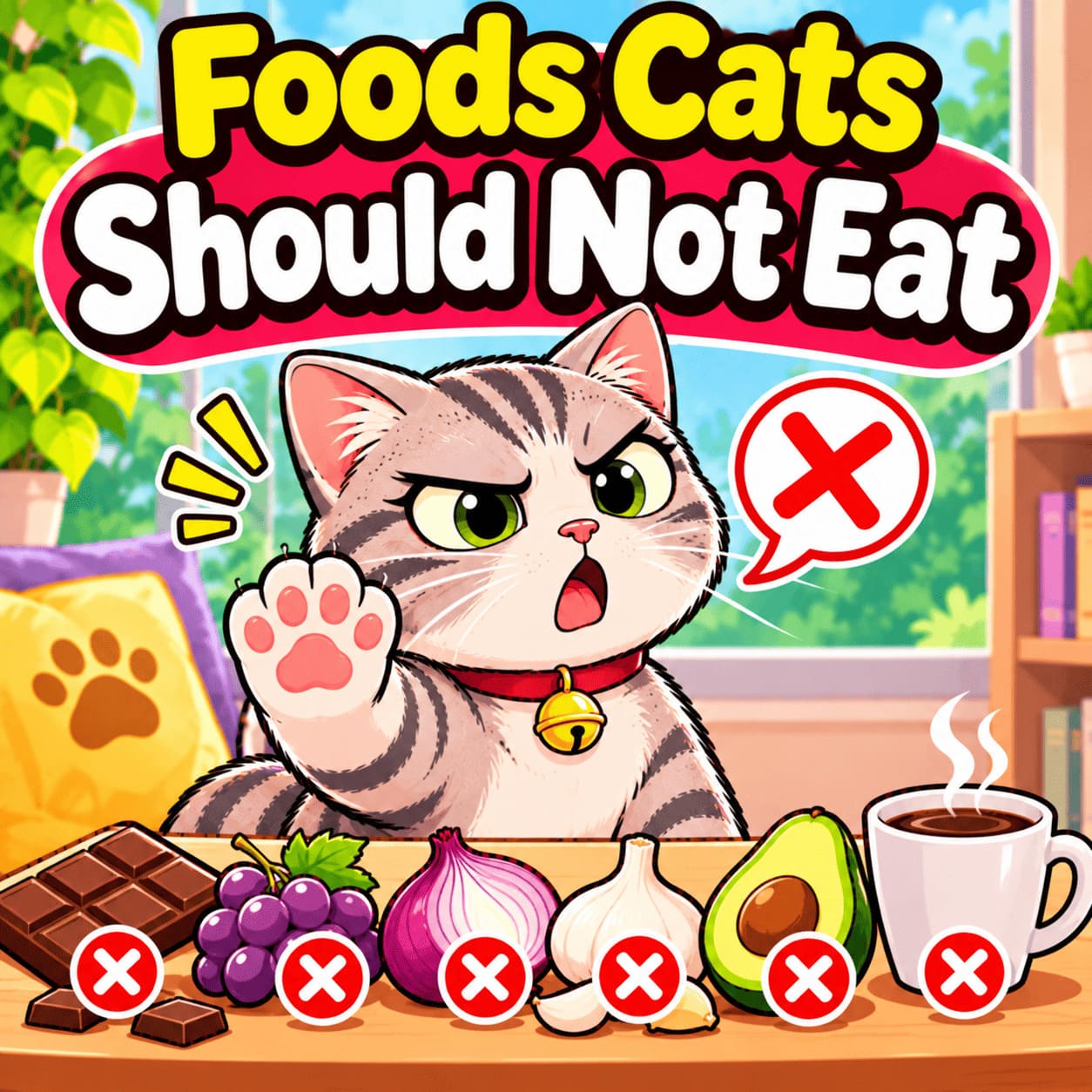
We’ve all been there. You’re sitting down to a nice Sunday brunch, and suddenly, you feel “The Stare.” You look down to see your tiny feline roommate looking at your plate of eggs and bacon with the intensity of a thousand suns. If your cat begs for it, that doesn’t mean it’s safe. In fact, some of the foods cats love most—the ones they would practically sell your soul for—are the most dangerous. Context matters when you’re reading foods cats should not eat.
Most owners think a tiny lick of sauce or a piece of cheese is a “victimless crime,” but understanding why cats beg after eating is the first step in realizing that their stomach doesn’t always know what’s best for their liver.
From stealing food from plates to licking leftover cereal bowls, our cats are opportunistic eaters. However, food theft behavior isn’t just about being naughty; it’s an evolutionary drive that often leads them straight into the path of toxicity.
Feeding unsafe foods can cause everything from mild digestive upset to full-blown organ failure. If you notice things going south, keeping an eye on a normal vs. abnormal cat poop chart can help you determine if that “tiny snack” has caused internal damage.
Framing Statement: Attraction ≠ nutrition.
Quick Reality Check: Cats evolved as obligate carnivores to eat whole prey—not the complex, seasoned, and processed “human food” we keep in our pantries.
Why Cats Are Attracted to Human Food
Understanding foods cats love but shouldn’t eat helps you respond to your cat correctly. Small observations about foods cats should not eat add up quickly.
It’s hard to say no to a cat who thinks your ham sandwich is a gift from the gods. But why do they want our food so badly? Every owner should know the basics of foods cats should not eat.
Cats chase smell, not safety. Their noses are highly tuned to detect the aroma of amino acids (protein) and fats. When you sear a steak or open a can of tuna, you are essentially releasing a biological siren song. This taste perception is far more focused on fat and salt than the complex flavors we enjoy. To a cat, your buttery croissant just smells like “high-density energy.”
Believe it or not, we often train our cats to be thieves. If you give your cat a piece of turkey while you’re making a sandwich, you’ve just rewarded them for hovering. This creates a reinforcement cycle where the cat associates your kitchen activity with a high-value reward. Establishing a strict feeding schedule for cats can help break this cycle of constant expectation.
Warm food smells irresistible to a predator. In the wild, fresh prey is warm. When we pull a rotisserie chicken out of the oven, the heat amplifies the scent of the fats, making it a “super-stimulus” for a cat. This is why the dry vs. wet food debate often leans toward wet food—it mimics the moisture and temperature of a fresh kill.
Why Owners Accidentally Feed Dangerous Foods
This section breaks down foods cats love but shouldn’t eat in more detail. Reliable information on foods cats should not eat makes everyday care easier.
Sharing food feels like bonding. When our cats purr and rub against our legs while we eat, we view it as a social moment. We want to say “thank you” for their companionship. However, understanding how cats say thank you shows that they don’t actually need food to feel the bond—a slow blink or a head-butt is enough.
We often think, “It’s just a tiny piece of onion,” or “A sip of milk won’t hurt.” But dose matters—and for a 10-pound animal, toxicity happens fast. What seems like a crumb to you is a full serving to them. This can lead to treat overfeeding signs that mask the early stages of toxicity.
Pattern Interrupt: Foods Cats Love vs. Danger Level
Knowing foods cats love but shouldn’t eat makes a real difference for your cat’s wellbeing.
Despite what every cartoon from the 1950s told you, cats and milk don’t mix. Cats love the fat and the creamy texture, but most adult cats are lactose intolerant. They lack the lactase enzyme to break down the sugars in milk. This leads to abnormal stool and diarrhea, which can quickly cause dehydration.
2. Chocolate & Caffeine
Small amounts can be deadly. Chocolate contains theobromine and caffeine, both of which are stimulants that a cat’s system cannot process. This can lead to heart arrhythmias, tremors, and seizures. If your cat is hiding or acting strange after getting into the Halloween candy, it’s a medical emergency.
3. Onions, Garlic & Leeks
These destroy red blood cells. Whether raw, cooked, or powdered, members of the Allium family cause oxidative damage to a cat’s red blood cells, leading to hemolytic anemia. Watch for pale gums or sneezing-like distress as their oxygen levels drop.
4. Raw Dough & Yeast
This expands inside the stomach. If a cat eats raw bread dough, the yeast continues to ferment in the warm environment of the stomach. This causes life-threatening bloating and produces ethanol as a byproduct. This abdominal distress is excruciating for the cat and often requires surgery.
5. Alcohol & Fermented Foods
Cats metabolize alcohol extremely poorly. A single tablespoon of hard liquor can put an adult cat into a coma. Alcohol causes rapid central nervous system depression. If your cat looks lethargic or is exhibiting “depressed” behaviors after a spill, you need to act immediately.
6. Processed Meats & Salty Snacks
Salt overload damages kidneys. Deli meats like ham or turkey are loaded with sodium and nitrates. Excessive salt leads to “salt poisoning,” causing vomiting and tremors. It also makes proper hydration almost impossible for their tiny kidneys to maintain.
Foods That Are “Sometimes Safe” But Risky
Let’s look closer at foods cats love but shouldn’t eat and what it means for your cat. Good habits around foods cats should not eat build trust over time.
These foods aren’t necessarily toxic in one bite, but they cause long-term problems.
Tuna (Human Canned)
Great for a treat, but human-grade tuna is too high in mercury and lacks taurine. Over-reliance can lead to nutritional imbalances.
Bones & Fish Scraps
These are massive choking hazards. Cooked bones splinter and can pierce the digestive tract, leading to vomiting or internal blockages.
Eggs & Raw Meat
While they are protein, raw versions carry Salmonella and E. coli. These pathogens are just as dangerous for your cat as they are for you, signaling potential immune stress.
Pattern Interrupt: Symptoms of Food Toxicity
This is a key part of foods cats love but shouldn’t eat that many owners overlook. Understanding foods cats should not eat helps you respond calmly and early.
What To Do If Your Cat Eats Unsafe Food
Recognizing foods cats love but shouldn’t eat early can help you act sooner. If you’re unsure about foods cats should not eat, observe first and act second.
Get the food away from the cat immediately.
Check the ingredient list for hidden garlic, onions, or xylitol. Here is one more useful note on foods cats should not eat.
Or call the Pet Poison Helpline. Have your cat’s weight and the amount ingested ready.
Check for litter box red flags such as straining or blood.
Never induce vomiting unless specifically told to do so by a professional. You can cause more damage, similar to the risks of using unsafe cleaning chemicals around them.
Safe Human Foods Cats Can Eat Occasionally
Keep foods cats love but shouldn’t eat in mind as you read through this section. Keep this in mind whenever you think about foods cats should not eat.
If you absolutely must share, stick to the basics.
-
Plain Cooked Chicken: No skin, no salt, no seasoning. This is the “gold standard” for a cat-safe human snack.
-
Pumpkin: A great source of fiber for digestion.
-
Cooked Egg: Scrambled or boiled is fine, provided there’s no butter or salt.
-
Fish: Small amounts of cooked salmon or whitefish.
How to Stop Food Stealing Behavior
Understanding foods cats love but shouldn’t eat helps you respond to your cat correctly.
Frequently Asked Questions About Foods Cats Should Not Eat
Knowing foods cats love but shouldn’t eat makes a real difference for your cat’s wellbeing. The key point about foods cats should not eat is to watch patterns, not single moments.
Love isn’t sharing your plate. It’s hard to ignore those big eyes, but protecting your cat’s internal organs is the ultimate act of care. Stick to cat-safe foods, read every ingredient label, and remember that prevention is always easier (and cheaper) than a 2:00 AM trip to the emergency vet. A calm, consistent approach to foods cats should not eat works best for most cats.
Maintaining safe cleaning and feeding routines is how you ensure your cat lives a long, healthy life.
Feed wisely—protect quietly.
References
- ASPCA Animal Poison Control: “Toxic and Non-Toxic Plants and Foods.”
- Journal of Feline Medicine and Surgery: “Nutritional Toxicology in the Domestic Cat.”
- Cornell Feline Health Center: “Feeding Your Cat: Know the Basics.”
- AVMA: “Foods to Avoid Feeding Your Pet.”
- Pet Poison Helpline: “Top 10 Cat Toxins.”
Want to learn more about related cat behavior? Check out our guides on how many cat treats is too many cat weight gain signs. For additional veterinary-reviewed information on foods cats love but shouldn’t eat, see the ASPCA Animal Poison Control Center.